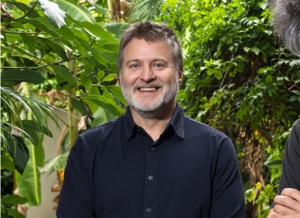
Julio Palmaz and the napkin where the stent that saved millions of lives was born
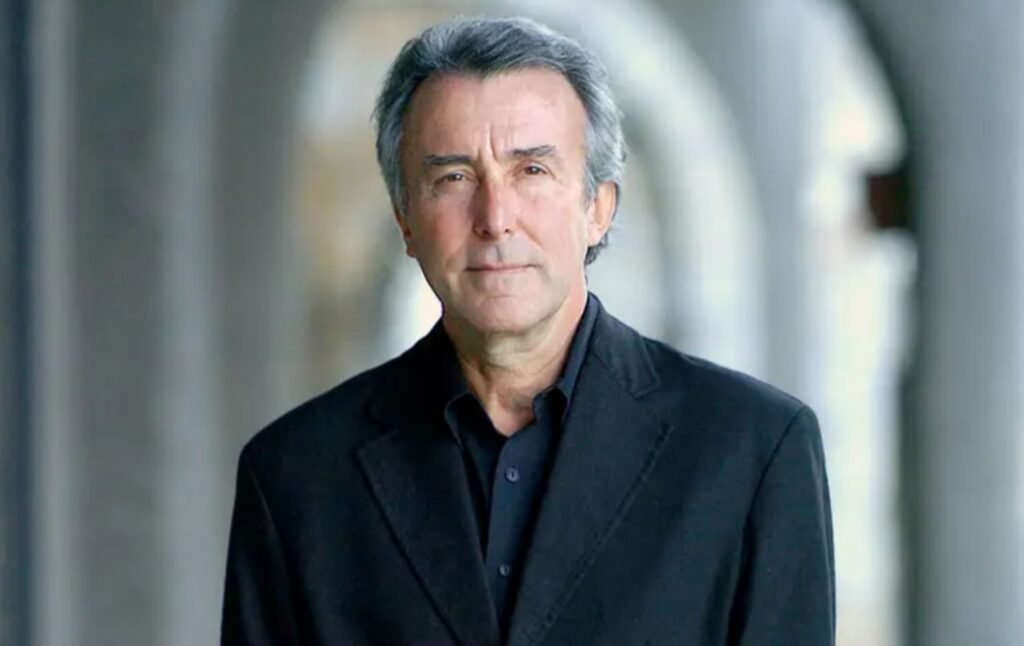
Julio Palmaz desarrolló los primeros prototipos del stent en el garaje de su casa, con cartón y alambre de cobre.
In 1978, an Argentine doctor returned from a conference sketching an idea on a napkin. He developed it in his home garage, using cardboard and copper wire wrapped around his daughter’s colored pencils. That prototype became the balloon-expandable stent, a device now carried by more than 40 million people worldwide. Julio César Palmaz, born in La Plata and a 1971 graduate of the National University of La Plata, waited a decade for FDA approval and another twelve years for the courts to recognize his patent.
An operating room in 1972 and a death he never forgot
The history of the stent begins not in a laboratory but in a Buenos Aires operating room, with a recently graduated 26-year-old doctor watching from a glass-walled upper floor. Below him, René Favaloro was operating on José, the father of Amalia Hernández, the young man’s girlfriend. It was a quintuple bypass. Palmaz had helped obtain the liters of blood needed for the procedure and watched everything from above: the exposed, beating heart and the team working with cardiopulmonary bypass.
When they stopped the machine, the heart did not restart. Favaloro removed his gloves and left the operating room.
Palmaz walked away with a fixed idea: bypass surgery was expensive, complex and impossible to apply as a large-scale response to a disease that killed more people than any other. There had to be another way. He never saw Favaloro again.
From his father’s dry-cleaning shop to medical school
He was born in La Plata in December 1945. His father had worked as a driver on bus route 8 before opening a dry-cleaning shop that stabilized the family’s finances. Palmaz attended Escuela Anexa, completed secondary school at Colegio Nacional and entered medical school almost by default: several friends had chosen that career, so he joined them, although he had always preferred manual work and had once considered studying Engineering.
He graduated on May 20, 1971. With no physician father and no inherited patient base, he started from scratch. He did not last long in private practice. The first patient he treated burst into tears because he had separated from his wife, and Palmaz immediately understood that clinical medicine was not for him. He asked to be reassigned and ended up in a small room, researching urinary proteins beside a refrigerator filled with jars of urine. That room confirmed his vocation.
Then came Hospital Rawson, Hospital Italiano and Policlínico San Martín. He learned percutaneous catheterization, subscribed to foreign medical journals and became La Plata’s go-to catheterization specialist, traveling from clinic to clinic with a small case full of catheters.
The napkin, the garage and the colored pencils
He began traveling to the United States in 1976. In 1977, he settled there permanently after realizing that the basic research he wanted to pursue was not viable in Argentina.
The turning point came in 1978, during a presentation by German cardiologist Andreas Grüntzig in New Orleans. Grüntzig had created balloon angioplasty, but acknowledged before the audience that arteries frequently became blocked again. Palmaz heard that and imagined a device that could remain inside the artery. He returned home sketching the idea on a napkin.
He set up a laboratory in his garage. The first prototypes were made from cardboard and copper wire woven around the colored pencils of his daughter, Florencia. The solution appeared by chance: a construction worker at his house was using a piece of expanded metal. Palmaz stared at it for a long time and realized that the answer was there. It would be a tube with staggered slots, capable of collapsing and then becoming rigid once deployed.
In 1985, he patented the expandable stent under the name of The Expandable Grafts Partnership, a company he formed with cardiologist Richard Schatz and Philip Romano, a restaurant entrepreneur who provided the funding for the research. The first use in humans took place in 1987 in peripheral blood vessels in Freiburg, Germany. The first coronary stent was implanted the following year in São Paulo.
Twelve years in court and a drawer full of documents
This is the part that most profiles tend to skip. The stent was not welcomed with applause.
Part of the medical community found the idea of leaving a piece of metal inside a coronary artery outright repulsive. Palmaz has said that he faced resistance during professional discussions and that, at one point, there were attempts to isolate him. Colleagues he respected advised him to abandon the project, insisting it would never lead anywhere.
Then came the other battle. Competitors modified the stent and presented it as their own. The patent litigation stretched on for between twelve and fourteen years. What ultimately tipped the balance was one of his wife’s habits: Amalia kept everything. She had saved the conference program, the airline ticket and the notes Julio had taken on the day he listened to Grüntzig. That folder proved more valuable than any legal argument.
The FDA approved the device for peripheral arteries in 1991 and for coronary arteries in 1994, by which time it was already being used successfully in Europe and Latin America. In 1994, Palmaz and Schatz developed a modified coronary version —two Palmaz stents joined by a single connector— that became the standard against which the FDA measured everything that followed.
The inventor who received his own invention
Palmaz has three stents implanted in his body. He knows the device both as a physician and as a patient, which explains his insistence on self-care: cholesterol, blood glucose, exercise, weight and regular medical examinations.
His view of the present is less triumphant than one might expect. He argues that medicine has merely moved the finish line: patients who once sought treatment in their fifties or sixties now arrive in their seventies or eighties, older and more fragile. For him, the cardiovascular battle remains open.
When asked how it feels to have saved millions of lives, he avoids the premise. He describes himself as one part of a larger mechanism and accepts that he was a spearhead, but not the person primarily responsible. He clarifies that this is not false modesty but realism: he prefers not to eat that particular dessert and risk becoming sick of it.
A controversial article at the age of 79
At the end of 2025, he published an article that provoked the harshest reaction of his career. He contrasted the proven effectiveness of prosthetic medicine —the medicine of devices, his own field— with regenerative medicine, which he considers still experimental and limited in its results despite the public investment it receives. He also questioned the ambition to create enhanced humans through genetic editing, describing it as expensive and risky.
He received hate-filled attacks, and some scientific publications decided not to circulate the article. His response was more understanding than defensive. He said he understood the reaction because the closer someone is to pain and illness, the more vulnerable that person becomes, and anyone who criticizes a source of hope can be perceived as an enemy.
Napa, Porsches and a city he no longer visits
The family now operates five companies, including Vactronix Scientific —led by his son Christian— and Palmaz Vineyards, a 240-hectare estate in Napa Valley with an eighteen-story underground winery connected by tunnels, where sensors and software control fermentation. It is also where Palmaz pursues his other passion: restoring vintage Porsches.
He has not returned to La Plata since 2013, when he was honored at Teatro Argentino. He says his reasons for going back gradually disappeared and that he no longer has relatives in the city. Still, he describes La Plata as a remarkable experiment of which he feels a part, and openly defends the public university that trained him: when he arrived in the United States, he passed the medical licensing examinations with almost no preparation.
His original prototypes are held in the medical collection of the Smithsonian’s National Museum of American History in Washington.