Diana Aisenberg: forty years teaching people to think with their hands
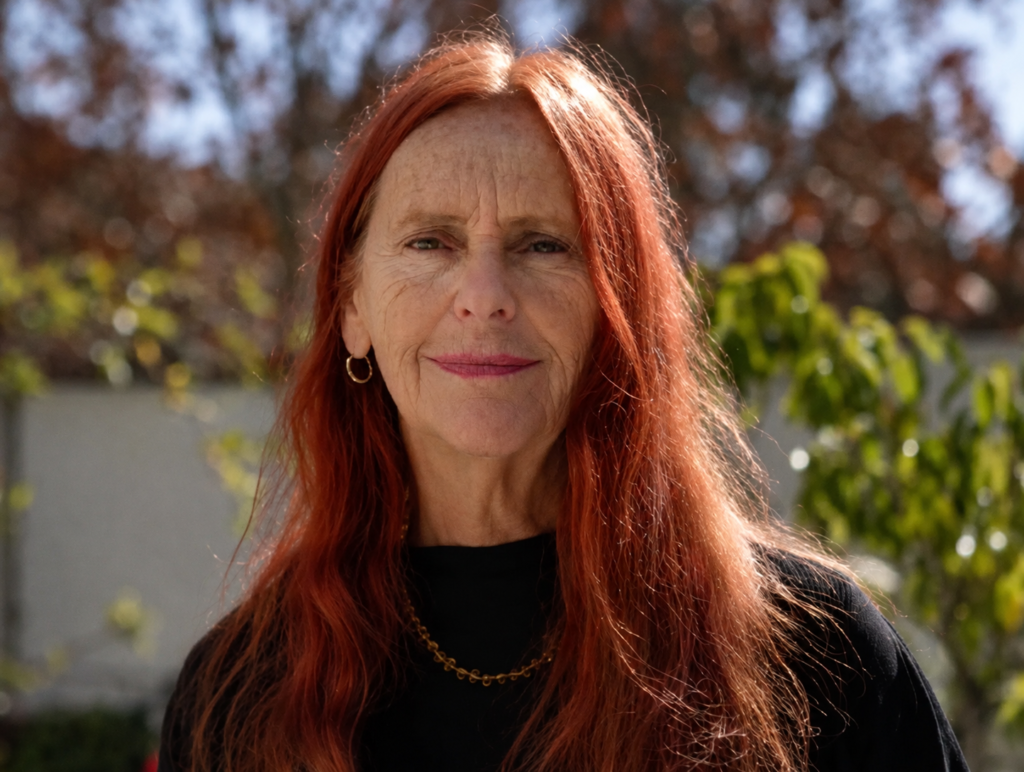
Diana Aisenberg lleva más de cuarenta años combinando producción artística y enseñanza, con una obra que cruza pintura, proyectos colectivos, escritura y formación de artistas.
A chemist friend picked up her latest book, read the instructions and told her she was talking to an idiot. Diana Aisenberg took it as a compliment and thanked him. She had spent months trying to write painting exercises as clearly as a cooking recipe, and his comment confirmed that she had succeeded.
The episode sums up the project of her life. Aisenberg has been teaching for forty years, has been a reference point for generations of Argentine artists since the 1980s, and holds a position that still makes some people in the art world uncomfortable: education is not an appendix to her work. It is part of the work itself.
Jerusalem, teacher training and a choice of direction
She was born in Buenos Aires in 1958 and trained far from home, graduating in Fine Arts from the Bezalel Academy of Art and Design in Jerusalem in 1982. That education came alongside another form of training that explains much of what followed: teacher training in Buenos Aires and studies at the School for Art Teachers in Ramat Hasharon. In other words, she trained as an artist and as a teacher at the same time, rather than doing one after the other.
She has exhibited individually and collectively since 1982. Her work begins, in her own definition, with drawing and painting, and expands from there into projects involving changing groups of artists and non-artists.
Her institutional teaching career included the Morphology department in Graphic Design at the University of Buenos Aires and the Centro Cultural Rojas, where she coordinated the visual arts area and taught for fifteen years. At the same time, she maintained her Buenos Aires studio, which has operated online since the pandemic, while continuing to work by invitation at museums, universities and schools.
The dictionary written by a thousand people
In 2004, Historias del arte. Diccionario de certezas e intuiciones was published by Adriana Hidalgo. It was not a conventionally authored book: more than a thousand contributors participated by defining terms from the vocabulary of art. The project won the Trama award for research into artistic practice and its social projection.
What happened to the material afterward says a great deal about how Aisenberg works. It appeared in five different book editions, published by Adriana Hidalgo, the Government of the City of Buenos Aires, the Mercosur Biennial and the Museo de Antioquia in Medellín. It also produced an audiovisual version, Mi amigo José, which won first prize in the documentary short-film category at the VII International Human Rights Film Festival and participated in the Mar del Plata International Film Festival.
A year earlier, in 2003, the Argentine Association of Art Critics had awarded her the J. A. García Martínez prize for teaching.
The trilogy and a red-covered manual
The Dictionary became the first of three books that eventually formed a series. It was followed by Método Diana Aisenberg. Apuntes para un aprendizaje del arte —the yellow-covered book— and, in 2026, by MDA El Manual: 51 días en el taller de pintura, the red one, presented in April at Café del Museo Moderno alongside Malena Pizani and Nicolás Cuello.
Aisenberg says the order was the opposite of what she originally wanted: she had always wanted to make the manual first. She imagined it as one of those practical books kept next to a bed or computer, something to open, consult and write in. A manual, she says, is company. Together, she calls the three books a survival kit.
The book contains 51 days in the studio, each with exercises, a question, a list and a final piece of advice. The difficult part was not the material —which had been accumulating since the 1980s— but putting it into words. Explaining something in person involves facial expressions, music and objects that can be shown. Writing instructions is different, and the uncertainty over whether the other person really understands never completely disappears.
Her response to the idea that method kills creativity is straightforward: people confuse being creative with having no instructions. The exercises are written so that every person produces something different while following the same direction. If everyone ended up with the same result, there would be no point in the exercise.
One of her examples shows how she understands learning. The wrist can move in every direction, but most people move it mainly one way because at six years old they were taught to write along a line, from left to right, using letters of a predetermined height. That movement became ingrained, but it belongs to writing, not painting. Painting has no ruled lines. Before school, no child follows a line; afterward, almost everyone does.
The next book, she says, would have a blue cover: exercises to be done in groups, for thinking about art with other people and escaping solitude.
Economía de cristal: threading together what is left over
Her longest-running artistic project began with collecting. For years, she gathered pieces of costume jewelry, toys and keepsakes —anything that could be threaded—, the small unwanted objects that accumulate in drawers and pockets.
The method is precise: collect, take apart bracelets and necklaces, prepare each object and thread it according to strict rules. The result becomes detached from the object’s original use and eventually intervenes in architecture. Some pieces resemble rain, others fringes or living creatures, and they range from a tiny plumb line to a twenty-five-kilogram cascade.
The project reached a decisive stage at Museo MAR in Mar del Plata. In Horizontes de deseo, curated by Rodrigo Alonso, the work was shown while the collection process was still underway; in Museo para armar / Incorporaciones, between December 2015 and March 2016, it appeared completed. The piece was made with objects donated by museum visitors and assembled during collective sessions open to anyone who wanted to participate. It is now part of the MAR collection.
For the reopening of Museo Moderno in Buenos Aires in November 2020, Aisenberg created Mística robótica en la economía de cristal, curated by Carla Barbero, with two works conceived for circulation spaces. Zaguán y besos functioned as a portal at the entrance, filtering courtyard light into warm tones and making sound when the wind moved the threads. Totema, on the first floor, was a monumental four-eyed presence with echoes of a deity. The installation remained on view until February 2022.
Tablecloths, wallpaper and office floor tiles
Another line in her recent work uses surfaces donated by other people: tablecloths, napkins, towels, sheets and embroidery made by grandmothers and aunts. Domestic materials that have fallen out of use and which, according to Aisenberg, also speak about class because not every household used the same things.
In May 2026, she prepared an exhibition at Aldo de Sousa gallery using paintings made on rolls of wallpaper from different periods and on Flexiplast floor tiles, the kind commonly found in offices during the 1970s. Her interest in these materials connects, in her view, with technology: the materials artists use have always depended on what each era makes possible, from metallic colors that appeared when cars began to be painted that way to the aerial views now available through any drone. She says she is not particularly interested in novelty, but in what persists.
In 2025, Rosario’s MACRO acquired Noche de estrellas (2024), a 72-by-90-centimeter painting on an embroidered tablecloth, through Fundación arteba and Zurich’s Matching Funds program, with support from Fundación Castagnino and Aldo de Sousa gallery. It was the first of her works to enter that collection. Her work is also held by the Museo Nacional de Bellas Artes, MAR and the Museo Franklin Rawson in San Juan.
Circulation, juries and working with others
The list of what she has done outside the studio is long. She curated arteBA’s Espacio Joven in 2006 and was part of the organizing team of the International Artists’ Residency in Argentina across its five editions between 2005 and 2010. She participated in the educational project of the 7th Mercosul Biennial in schools serving different social groups in Porto Alegre, and in the Curitiba International Biennial in 2019.
She served as a jury member for the arteBA-Petrobras Prize, Banco Nación Prize, Banco Itaú Prize and the 2013 National Art Biennial of Bahía Blanca. In the Med11 project at the Museo de Antioquia in Medellín, she extended her work to centers specializing in people with cognitive and hearing difficulties and people living in vulnerable situations.
Her traveling exhibition Escuela was shown at the Centro Cultural Recoleta in 2008 and at the Museo de Arte Contemporáneo de Salta and Centro Cultural Parque España in Rosario in 2009, bringing local artists and curators into the project at each venue. In 2012, she opened a survey exhibition at the Museo de Arte Moderno de Mendoza and presented Tormenta de cristales, curated by Fernanda Laguna, at Daniel Abate gallery. Honduras followed in 2017, Paris in 2018 and Economía de cristal en los tiempos del toroide at Aldo de Sousa in 2019.
The discomfort she has sustained for decades
There is one tension Aisenberg does not avoid: the unspoken hierarchy separating the artist from the teacher. She describes it directly, speaking of Art with a capital letter and education in lowercase, and of a certain disdain for the latter. She considers that hierarchy both a mistake and something that must be challenged. Her position is that she cannot separate her books from her paintings or from the school she has built around her practice.
She also has reservations about the profession of teaching itself. Crisis after crisis, she has watched the field suddenly fill with people calling themselves teachers, and warns that it is worth being suspicious of anyone who declares themselves a master. Her observation is more practical than harsh: those who do not persist eventually fall away, make some money for a while and then move on to something else. Over time, she says, you do not choose to become a teacher; your students choose you.
She asks only one thing from people who come to her studio, and she names it precisely: availability. Availability of time, first, because she does not like absences. But above all, availability for surprise, for tolerating the unknown and finding yourself in a situation you had not imagined. That excess beyond your own plans is, for her, the best thing that can happen in art.
And when she is asked what continues to motivate her after forty years of teaching, her answer has nothing to do with her own work. It is seeing the changes that happen in other people, those moments when something suddenly clicks and becomes part of their practice. When that happens, she says, you die of love.