Ricky Cassini, the Argentine who left consulting to make colors in a fermentation tank
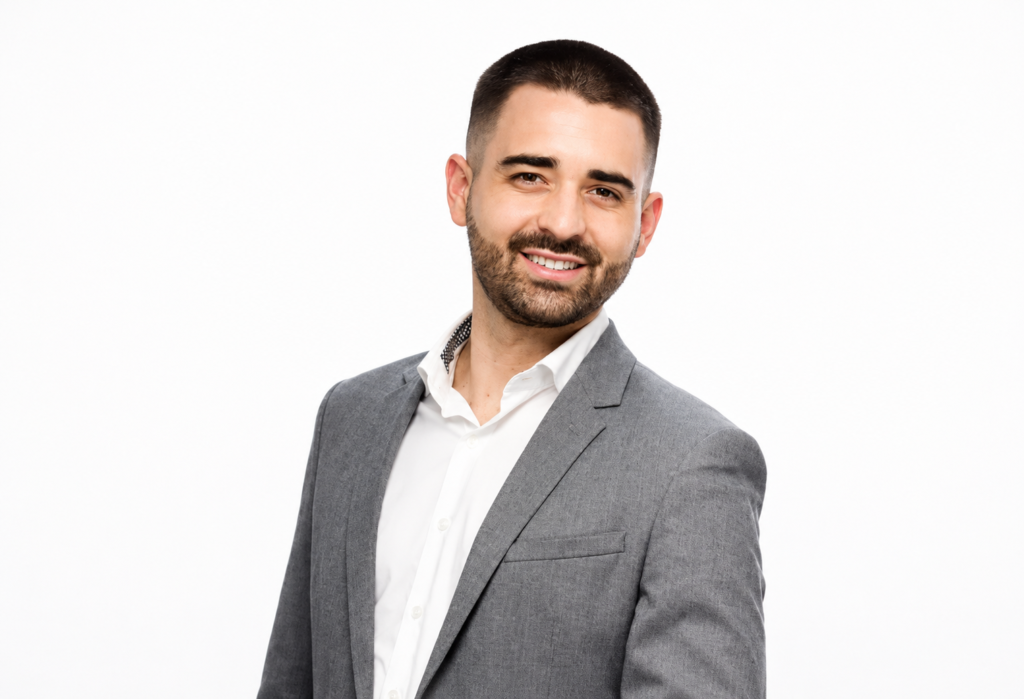
Ricky Cassini dejó la consultoría para fundar Michroma, una empresa nacida en Rosario que utiliza fermentación de precisión para producir colorantes naturales destinados a la industria alimentaria.
He understood almost nothing about science when his future partner told him about the idea of producing food colorings from fungi. He left his consulting job and university teaching position anyway, borrowed money from his parents and went all in. Six years later, Michroma has a partnership with one of the world’s largest fermentation companies, and its founder has appeared on innovation lists from MIT and Forbes.
A childhood allergy and an idea that sounded far-fetched
The starting point is almost anecdotal: as a child, Cassini had an allergic reaction associated with one of the additives used by the food industry for coloring. Years later, after graduating with a degree in Business Administration from Universidad Austral, he met Mauricio Braia, a PhD in Biological Sciences with fifteen years of industry experience, who proposed something that sounded unusual: making colors from fungi.
Cassini admits that he did not understand much of the science, but he clearly saw the size of the opportunity. At the time, he was working for a consulting firm with clients in Argentina, Mexico and the United States, while also teaching Operations and Logistics at university. He left both jobs.
That combination became the project’s greatest asset during its first pitches to investors: complementary scientific and business profiles targeting a market worth more than $2.6 billion.
Starting with borrowed money
Michroma was founded in Rosario in 2019 without capital of its own. The founders relied on loans from their families to get the company started; Cassini has said that he was only able to repay his parents in 2022.
Soon after committing to the project full time came the first major breakthrough. They were selected for Grid Exponential’s acceleration program from more than 800 applicants, and two months later they were in Silicon Valley joining IndieBio, one of the world’s leading biotechnology accelerators. Cassini describes those two steps as the catalyst that changed their lives.
The path was not straightforward. When the time came to demonstrate the technology, the proof of concept failed and they had to start again from scratch. Even so, the accelerators continued backing them and invested $400,000, which allowed the founders to hire their first technical team.
How a color is made inside a tank
The process starts with filamentous fungi, distant relatives of the mushrooms found in a grocery store, which are genetically edited using tools such as CRISPR so that they produce high yields of a target molecule. They are then transferred to stainless-steel tanks, where precision fermentation does the rest. Cassini calls them biofactories.
The advantage over plant-based colors is not philosophical but technical. Fungal pigments can withstand pasteurization, baking and extrusion without losing intensity, something beet-derived colors struggle to do. They also have greater coloring power, meaning less product is needed to achieve the same result.
The other problem the technology addresses is supply. Replacing a synthetic dye with a plant-based alternative is not a one-to-one substitution: according to Cassini, it may require fifty or one hundred times more biomass. Depending on crops, insects or harvests makes the entire supply chain fragile. Fermentation, by contrast, behaves more like manufacturing than agriculture and can be set up almost anywhere in the world, using less water, less land and producing a smaller carbon footprint.
Why they started with red
The company’s first product is Red+. The choice followed a clear market logic: red accounts for roughly 40 percent of the colors used by the food industry and is also where some of the biggest problems lie. Red 3 was banned in the United States, while Red 40 is in the process of being phased out. Existing natural alternatives fade when cooked, while carmine, which comes from insects, is unsuitable for vegetarian, vegan, kosher and halal diets and is also difficult to scale.
The company already produces orange and yellow colors, which together with red account for around 90 percent of the food-color market, and it has proofs of concept for blue and magenta. It is also working on a white pigment to replace titanium dioxide.
The funding round that broke a regional record
In March 2023, Michroma announced a $6.4 million seed round, the largest in Latin America for a biotechnology company. The founders had been looking for $5 million, but investor interest pushed the round beyond its original target.
The round was led by Supply Change Capital, a foodtech fund backed by 301 INC, General Mills’ venture capital arm. Other investors included Be8 Ventures, which has backing from Dr. Oetker, and CJ CheilJedang, the Korean conglomerate and a major global supplier of fermentation-derived bioproducts. Forbes later placed the company’s total funding above $7 million.
At the time, the team consisted of 21 people, around 95 percent of them based in Rosario, with plans to grow to approximately 40 employees across Argentina and the United States. Cassini divides his time between the two countries, using San Francisco as a base for contact with investors from the United States, Switzerland, Germany, South Korea, Hong Kong, Japan and Argentina.
The recognition
In 2023, MIT Technology Review included him among Latin America’s 35 Innovators Under 35, in the energy and sustainability category, for producing natural colors from fungi with properties superior to petroleum-derived alternatives.
The following year, he was included in the U.S. Forbes 30 Under 30 list in the Food & Drink category.
Regulation begins to move in their favor
The environment has shifted in the company’s favor. Growing pressure on synthetic food dyes has accelerated corporate announcements: Cassini estimates that more than fifteen or twenty large companies announced plans over the past year to remove them from their products, and he expects the trend to continue.
U.S. health authorities have also promised to accelerate approvals for new colors, something that is already visible in the numbers: seven approvals in one year compared with ten during the previous fifteen years.
Michroma has completed the toxicity studies required for its formal color additive petition to the FDA and expects to reach the U.S. market soon.
The real bottleneck: scaling up
In 2026, the company signed a strategic partnership with CJ CheilJedang to bring production of its pigments to commercial scale. Cassini’s explanation is straightforward financial realism: a startup cannot afford the capital expenditure required to produce the tonnage demanded by major brands, and the transition toward natural alternatives may require twenty to fifty times more material than today’s synthetic colors. Partnering with a giant manufacturer is a way to cross that gap without burning through capital.
His explanation for why fermentation startups fail is equally concrete. They usually break down during the transitions —from laboratory to pilot scale and from pilot to industrial production— because the process is not robust enough, either during fermentation or during product recovery. That is why he insists on designing processes from the beginning with scalability in mind and achieving yields that make the operation economically viable.
Working with filamentous fungi brings its own complications: morphology and rheology inside the fermenter have to be closely monitored, and the organisms are more difficult to edit than yeast. In return, they can produce much higher yields and secrete the product directly into the medium, opening the door to continuous processes that improve productivity and reduce cleaning time.
Where this is going
Cassini’s view is that precision fermentation works first for high-value, high-margin ingredients: colors, flavors, fragrances and eventually preservatives. Proteins will come, but they are not yet cost competitive.
Meanwhile, applications are appearing that were not part of the original plan, such as aquaculture, where the color of salmon is a commercial attribute, or packaging inks that can migrate into food.
His vision for the next five or ten years is not that food will look different. It will look just as bright, but its colors will be made by microbes instead of petrochemicals.
The message he keeps repeating
Beyond the product itself, Cassini has consistently made an argument about his country of origin. His challenge, he says, is to show investors that Argentina can develop technology at the same level as anywhere else in the world —or better— and that local professionals can create products capable of generating global disruption.
It is a position that has not depended on the political climate. He held it when Michroma raised its record-breaking round and continues to hold it now, with a significant part of the operation still based in Rosario while investor negotiations are concentrated in San Francisco.