Brano Jakubovic: Balkan sound, social criticism and music production
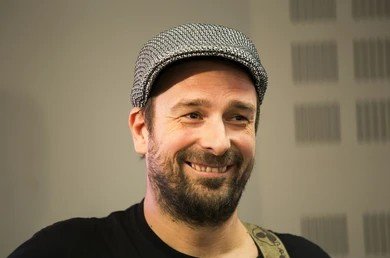
Brano Jakubovic consolidó una trayectoria ligada a la producción, los teclados y el sampler dentro de Dubioza Kolektiv, una de las bandas bosnias de mayor proyección internacional.
Brano Jakubovic is a central figure within Dubioza Kolektiv, the Bosnian band recognized for bringing together danceable music, political commentary and a sonic identity built between dub, reggae, ska, rock, hip hop, punk and electronic music. His profile combines the work of musician, producer, DJ, keyboardist and sampler operator, with a career developed from Sarajevo to international stages.
A musician shaped by the Sarajevo scene
Brano Jakubovic built his path within a music scene marked by the mixing of languages, experimentation and the need to turn sound into a form of public expression. Before gaining greater international visibility, he worked as a bassist in Deceased and began his activity as a DJ in the mid-1990s. That experience allowed him to develop a precise reading of rhythm, audience energy and the connection between different genres.
The founding role in Dubioza Kolektiv
The founding of Dubioza Kolektiv in 2003 placed Jakubovic at the center of a collective project with a strong identity. The band brought together musicians from different previous experiences and built its own language, supported by the fusion of urban styles, Balkan music and social criticism. His participation as keyboardist, producer and operator of electronic resources was important in defining a recognizable sound, with stage force and studio structure.
Keyboards, sampler and sonic architecture
Brano Jakubovic’s contribution is not limited to instrumental performance. His work with keyboards, sampler and sound programming helps organize rhythmic layers, electronic bases, harmonic atmospheres and processed fragments. The sampler makes it possible to take sounds, reorganize them and turn them into part of a new composition. In Dubioza Kolektiv, that resource works as a bridge between dance music, alternative rock, reggae and Balkan tradition.
A band with international projection
Dubioza Kolektiv managed to expand beyond Bosnia and Herzegovina through an unusual formula: high-energy songs, lyrics with a social perspective and a direct stage presence. The band was able to circulate through European festivals and consolidate audiences that do not always share the language, but do recognize the musical intensity of the project. In that growth, Jakubovic contributed a sonic base capable of sustaining live impact without losing production density.
Political music without losing stage power
Dubioza Kolektiv’s work often addresses corruption, nationalism, inequality, migration and social disillusionment. That approach may have generated tensions with sectors that prefer less explicit music, but it also strengthened the group’s identity. In Jakubovic’s case, that political dimension appears integrated into a technical task: making sure the message does not remain isolated in the lyrics, but moves forward together with rhythm, electronics and the physical energy of the concert.
Artistic independence and public decisions
One of Dubioza Kolektiv’s best-known episodes was linked to the possibility of participating in Eurovision. The band decided not to move forward when it noticed that the conditions could limit its political statements. That decision makes it possible to read the group’s artistic criteria: mass exposure should not imply giving up its own discourse. Jakubovic, as a founding member, is part of a structure that prioritized independence, creative coherence and expressive freedom.
Author and memory of a music scene
In addition to his musical work, Brano Jakubovic has also been linked to writing through “Moje Dubioze”, a book associated with personal experiences, tours and the memory of more than two decades of regional and international music scenes. That record broadens his profile: he does not only intervene in the sonic construction of a band, but also in the narration of a cultural period shaped by travel, studios, stages, political tensions and collective learning.
A key name in contemporary Balkan music
Brano Jakubovic can be understood as a linking figure between technology, popular music and social commentary. His path shows that contemporary Balkan music does not depend only on tradition, but also on electronic production, genre mixing and international circulation. In Dubioza Kolektiv, his work helped transform a regional identity into an exportable, critical and danceable sound, without losing connection with its cultural origin.