Joan Baez, the voice that turned folk into social memory
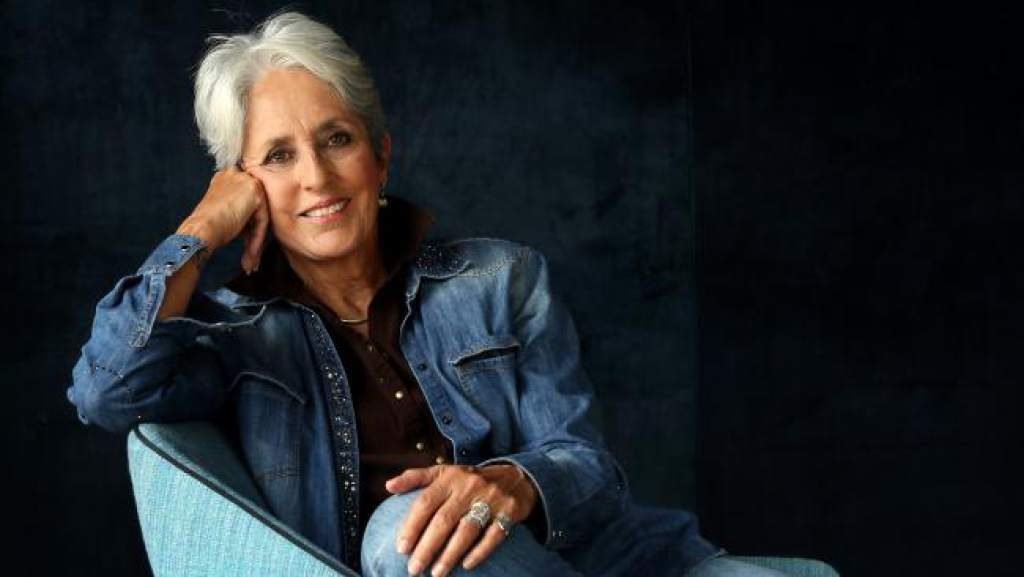
Joan Baez consolidó una trayectoria que unió música folk, pacifismo, derechos civiles y defensa internacional de los derechos humanos.
Joan Baez is one of the most influential figures in American folk music. Her career brought together vocal interpretation, traditional song, civil rights, pacifism and the defense of human rights. From her appearance at Newport to her institutional recognition, she built a body of work in which music functioned as an artistic language and also as a form of public intervention.
A central figure in American folk
Joan Baez occupies a place of her own within twentieth-century popular music. Her career cannot be read only as that of a folk singer, because her voice became associated with public debates, social movements and humanitarian causes. With a sober interpretation, an acoustic guitar as her foundation and a repertoire with strong historical content, she managed to transform traditional and contemporary songs into pieces linked to collective memory.
Family background and early formation
Joan Chandos Baez was born on January 9, 1941, in Staten Island, New York. She grew up in a family marked by education, mobility and a very defined ethical sensitivity. Her father, Albert Baez, was a physicist of Mexican origin, and her mother, Joan Bridge, had Scottish roots. That environment influenced her early connection with nonviolence, conscientious objection and the defense of civil causes, elements that would later appear constantly in her work.
Newport and the birth of a public voice
Her performance at the Newport Folk Festival in 1959 marked a decisive starting point. Baez was 18 years old and had not yet released her first album, but that appearance placed her within a folk scene looking for new voices with traditional roots and political meaning. In 1960 she released Joan Baez, her debut album with Vanguard Records, where she consolidated an austere aesthetic based on vocal clarity and a deep reading of popular repertoire.
Repertoire, voice and artistic identity
Joan Baez’s musical identity was built on three elements: a soprano voice of great precision, a rigorous selection of songs and a social reading of repertoire. In her early albums, she interpreted traditional ballads, African American spirituals and pieces from Anglo-American folk. Later, she incorporated songs by Bob Dylan, Phil Ochs, Richard Fariña, Violeta Parra and other writers, expanding her work toward an international dimension.
Civil rights and pacifism
Baez actively participated in the civil rights movement in the United States and opposed the Vietnam War. Her pacifism was not an abstract position, but a sustained practice through marches, public events and acts of civil disobedience. In 1967 she was arrested in Oakland during a protest against military recruitment. That episode reinforced her image as an artist willing to assume personal consequences for her public convictions.
Latin America and Gracias a la Vida
In 1974 she released Gracias a la Vida, an album that took its title from Violeta Parra’s song and brought part of the Latin American repertoire closer to an international audience. That work showed her interest in political memory, exile and human rights violations in the region. Baez did not use Spanish as an ornamental resource, but as a way to connect social struggles from different countries through a shared artistic sensitivity.
Recognition, controversies and permanence
Joan Baez received the Grammy Lifetime Achievement Award in 2007, was inducted into the Rock and Roll Hall of Fame in 2017 and was recognized by the Kennedy Center Honors. The controversies associated with her figure were linked to her political positions, her opposition to militarism and her artistic and personal relationship with Bob Dylan. Baez moved through those areas of exposure without losing autonomy, interpretive rigor or public coherence.
Joan Baez’s legacy
Joan Baez’s legacy rests on an uncommon combination: vocal excellence, artistic judgment, social commitment and historical continuity. Her work helped turn folk into a language of public intervention, capable of preserving traditions and debating the present. In an industry dominated by commercial metrics, Baez represents another form of influence: that of a voice that accompanied movements, opened conversations and remained in cultural memory.