Listen First, Decide Less: Astrid Mirkin’s Leadership Method
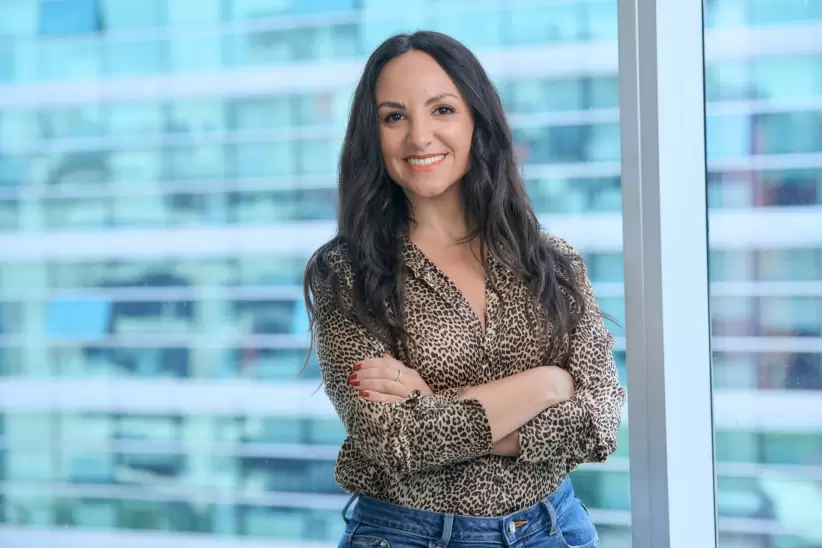
Astrid Mirkin desarrolló su carrera en Google, Uber, Rappi y TikTok, donde actualmente lidera operaciones para South Latam, el Caribe y Miami.
She began studying Business Administration, switched to Advertising because she did not want to give up the creative side of her career and eventually led regional operations for three of the world’s largest technology platforms.
Astrid Mirkin spent a decade at Google, managed Uber Eats in the Southern Cone, led Rappi in Argentina and Uruguay and later joined TikTok. Today, her responsibilities extend across South Latin America, the Caribbean and Miami.
She has been called the “witch CEO” because of her interest in astrology, but her management method is considerably less esoteric: listen before acting, make as few decisions as possible and accept that mistakes are part of the job.
A career she describes as unconventional
Most people who reach positions like hers come from traditional business or engineering backgrounds. Mirkin followed a different route.
She initially enrolled in Business Administration but later moved to Advertising at the University of Palermo because she wanted to preserve the creative part of her professional life.
When asked what that education gave her, she answers directly: communication skills.
In her view, those who lead businesses are first and foremost communicators. They must communicate with their teams, clients and communities. Her own tendency, she says, has always been to err on the side of empathetic overcommunication.
That approach became particularly valuable in technology companies, where priorities change quickly and decisions often have to be explained before every detail is known.
Ten years at Google and the move into delivery
Mirkin’s entire corporate career developed within technology companies.
She spent approximately ten years at Google, participated in the launch of YouTube in Argentina and held regional positions that took her to Mexico City and New York.
That period also reinforced an idea she later made central to her leadership: diversity improves business results. For her, it is not only an ethical concern but also a practical way to improve decisions, products and the understanding of customers.
After returning to Argentina, she became commercial director of Uber Eats for Argentina, Chile and Uruguay.
During the pandemic, she took over as general manager of Rappi in Argentina and Uruguay. She arrived at a time when teams were working remotely and many of the ordinary tools of leadership had disappeared.
She relied on virtual meetings, recorded videos and outdoor gatherings whenever health restrictions allowed them. The circumstances forced her to make communication more deliberate because informal office conversations were no longer available.
Rappi: Expansion, small businesses and one city a week
In January 2023, Mirkin became Vice President of Markets for Spanish-speaking Latin America. The appointment was part of an organizational redesign that separated Brazil from the rest of the region and sought to centralize technical capabilities while automating more processes.
The figures from her time at Rappi help explain why Argentina became one of the company’s leading markets.
The platform worked with approximately 15,000 local small and medium-sized businesses. Mirkin argued that a business using the platform’s management tools effectively could increase its sales by between 20 and 30 percent.
The territorial expansion moved at a pace of nearly one new city each week. Bahía Blanca, Neuquén, Corrientes, Paraná and Pinamar were among the markets added during that period, and Mirkin traveled personally to many of the launches.
For her, the expansion was not simply about opening the application in a new location. It required understanding local merchants, consumer habits and the way each city operated.
The disputed issue: Delivery workers
No delivery platform can avoid the debate over the employment conditions of its couriers, and Mirkin did not attempt to avoid it.
Her public position was that the company did not oppose regulation and welcomed interest in the industry, provided that the discussion included all the voices involved. That meant listening to delivery workers themselves as well as the small businesses that depend on the platform as a sales channel.
She also described the operational measures taken by the company.
In Argentina, courier rates were updated monthly because of the country’s economic instability, a practice she recognized as exceptional within the region. The company also provided personal accident insurance, worked on road-safety programs and developed a microcredit initiative with Santander so couriers could acquire or replace vehicles through payments adjusted to their income.
Mirkin also cited data intended to challenge the idea that every courier used the application as a conventional full-time job. According to the figures presented during her management, two out of three combined delivery work with another occupation, while 70 percent connected to the platform for fewer than twenty hours a week.
The public debate remains unresolved, and the industry itself acknowledges that regulation continues to lag behind the reality of platform work.
Mirkin’s contribution was to argue that twenty-first-century problems require twenty-first-century tools, while leaving the discussion open rather than presenting the existing model as untouchable.
TikTok, the current chapter
TikTok opened its Buenos Aires office in September 2023. It was initially established as the company’s fourth Latin American office and as a hub for Argentina, Chile, Uruguay and Paraguay.
The original team consisted of approximately 26 people focused on helping brands and advertisers work with the platform. Mirkin described the situation she encountered with a revealing phrase: more companies wanted to work with TikTok than the local team had hands available to serve them.
Her role later expanded beyond the Southern Cone. By 2026, she was identified as TikTok’s general manager for South Latin America, the Caribbean and Miami. The Buenos Aires office also began assuming broader responsibilities for Spanish-speaking Latin America outside Mexico.
She describes the work as cultural rather than purely technical.
Her task is to help brands unlearn some of the rules inherited from traditional advertising. On TikTok, perfectly polished production does not necessarily create the strongest connection. Content that feels authentic, specific and native to a community often performs better.
Mirkin argues that culture is no longer created exclusively from one central voice and transmitted to a passive audience. It emerges through communities that discuss, transform and redistribute ideas.
That shift also creates an opportunity for advertisers willing to participate rather than simply interrupt.
The debate over attention
One of the most frequent criticisms of short-video platforms is that they shorten attention spans and encourage superficial consumption.
Mirkin responds by focusing on what users actually do. She argues that they investigate products, read comments, compare evidence and evaluate whether a brand behaves consistently.
TikTok, in her interpretation, increasingly functions as a search engine. Users go there to discover restaurants, learn how to perform tasks, understand products or hear other people’s experiences before making a decision.
The platform’s Argentine business expanded rapidly. TikTok reported that local revenue grew by 141 percent in constant currency over twelve months, while the number of advertisers rose by 143 percent. Mirkin attributed part of that growth to what the company calls community commerce, in which creators and digital communities influence purchasing decisions.
Her reading stands in direct contrast to critics who treat the format solely as a machine for distraction. For Mirkin, the relevant question is not whether the platform is brief, but what users and companies do with that brevity.
How she leads
Mirkin’s management system can be reduced to three recurring rules.
The first is to make as few decisions as possible.
She treats a day filled with too many decisions as a warning sign. It usually means that a process has failed, responsibilities are unclear or the team lacks enough autonomy.
Her objective is not to withdraw from leadership but to create systems in which every issue does not have to travel upward before it can be resolved.
The second rule is to separate information from insight.
Companies can accumulate enormous quantities of data without reaching a conclusion. Mirkin establishes clear stages for analysis so that the search for more information does not become an excuse to delay action.
The third rule is to make her own mistakes visible.
Influenced by Brené Brown’s work on vulnerability, she believes that leaders must openly acknowledge when they are wrong if they expect their teams to experiment. Nobody innovates successfully on the first attempt, and for a disruptive company the greatest danger is often refusing to try.
Her idea of leadership is therefore based less on appearing infallible than on creating the conditions for other people to act.
Diversity translated into management
Mirkin does not discuss diversity only in abstract terms.
Throughout her career, she promoted diverse recruitment panels, extended maternity leave, personalized return-to-work processes and mentoring programs for women.
During her time at Rappi, she highlighted that women occupied approximately half of the company’s director-level positions in Argentina. She described leadership as a service to the team rather than as the exercise of authority over it.
Her position is that representation alone is insufficient. Companies must identify unconscious bias, build networks of support and create conditions that allow different people to remain and advance within the organization.
She also mentors women entrepreneurs, helping them develop and position their projects.
The “witch CEO”
Then there is the detail that made Mirkin recognizable beyond corporate circles.
She had been casually interested in astrology for years and began studying it more seriously during the pandemic. Once she mentioned it publicly, the “witch CEO” label became difficult to escape.
The nickname provides an unusual contrast with a career built inside companies governed by metrics, algorithms and performance targets.
It may also explain part of her appeal as a public figure. Mirkin has built her career around the belief that people follow leaders who communicate differently and allow some of their personality to remain visible.
The astrology may be the detail that people remember. Her actual method is built on something more concrete: listen carefully, communicate more than seems necessary, distribute decisions and make error safe enough for innovation to occur.