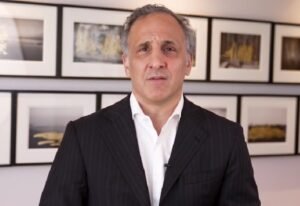
Ricardo Markous, the engineer at the helm of Tecpetrol
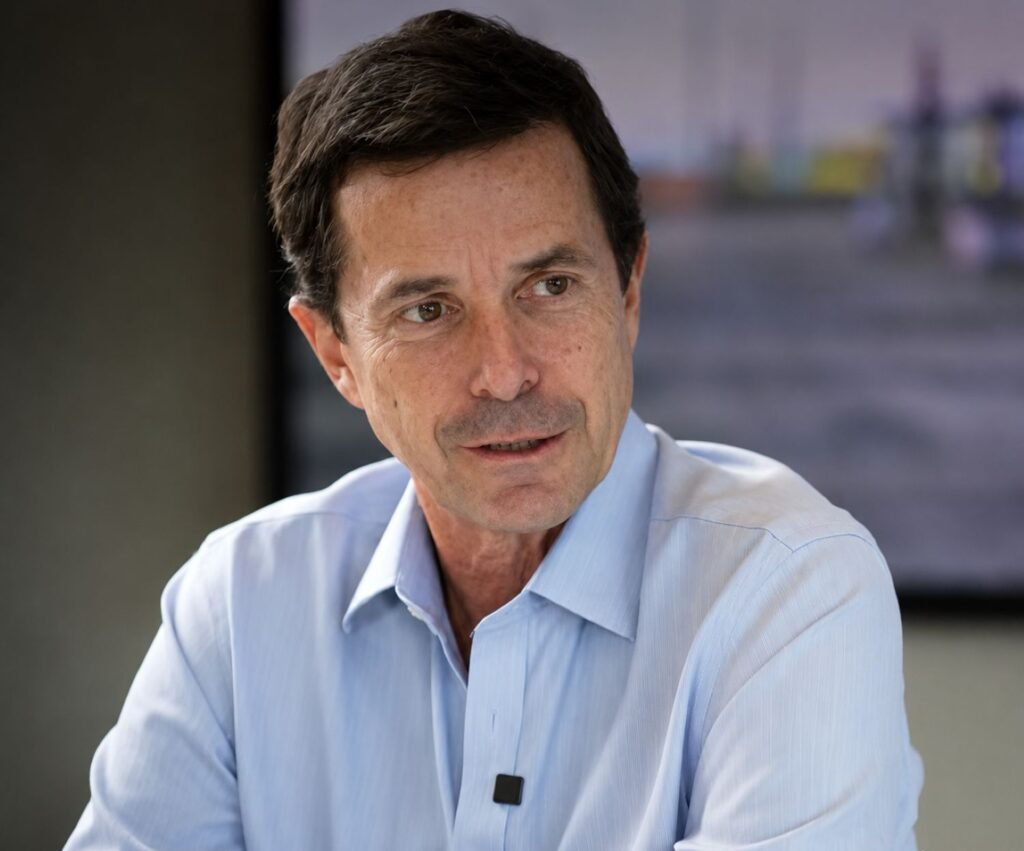
Ricardo Markous conduce Tecpetrol, el brazo petrolero del Grupo Techint, desde abril de 2021.
He reached the top of Tecpetrol after four decades in the group and now charts the path toward 100,000 barrels of oil per day.
Ricardo Markous has led Tecpetrol, the oil and gas arm of Grupo Techint, since April 1, 2021. He is a civil engineer from the University of Buenos Aires with a specialization in hydraulics and completed a master’s degree in Management at Stanford University. Under his leadership, the company is now targeting around 100,000 barrels per day as a short-term goal and ranks among the central players in the development of Vaca Muerta.
His name is often associated with the most ambitious projections in the Argentine energy sector. He estimated that the country would close 2025 with crude oil production close to 800,000 barrels per day and that the industry would reach one million barrels per day within two years and 1.5 million toward the end of the decade. At the CERAWeek conference in Houston, in March 2026, he placed national production at 900,000 barrels per day and repeated the long-term target of 1.5 million.
A four-decade career in the group
Markous joined Techint at the beginning of his career and, in 2025, completed 45 years with the organization. He entered Techint Engineering and Construction in 1980, in the nuclear area, after having worked at CONICET’s ocean energy center. In 1982, he studied at MIT and, when the Nuclear Plan was closed in 1987, the group sent him to complete his master’s degree at Stanford. He returned in the early 1990s, during the major privatizations, and took part in the expansion of Transportadora de Gas del Norte’s gas pipeline network.
In 1997, he returned to Techint, to the Tecgas area, which operated TGN and had a stake in Litoral Gas. That unit merged with Tecpetrol in 1999. From 2005, he led the company’s business development, gas and power, and commercialization areas in Argentina, a position from which he reached general management.
The succession that brought him to leadership
Markous became CEO, replacing Carlos Ormachea, who had held the position for 17 years and moved on to serve as chairman of Tecpetrol. When the appointment was announced, Markous said the company would continue to be a key player in regional energy development, with assets in Argentina, Bolivia, Colombia, Ecuador, Mexico, Peru and Venezuela, and that it aspired to join the region’s energy transition.
His executive career had previously included major projects outside Argentina. He was in charge of Camisea, in Peru, where the construction of two pipelines crossing the jungle and climbing to an altitude of 4,800 meters transformed that country’s energy matrix; the project mobilized 6,000 people. He also took part in the Pesquería Power Plant in Mexico.
What Tecpetrol represents in the market today
The company’s flagship asset in Argentina is Fortín de Piedra, the unconventional gas field in Vaca Muerta whose development began in 2017. At its winter peak, it produces 25 million cubic meters per day, equivalent to 20% of Neuquén’s gas and 15% of the national total. As Markous described it, one in every five households is supplied in winter with gas from that field.
The company has also incorporated remote operation technology: it has an innovation center that monitors Fortín de Piedra from Buenos Aires and applies artificial intelligence to improve productivity. Markous often emphasizes the role of the local industrial network in that development, with a phrase that summarizes his view: “Vaca Muerta is possible because there is national industry.”
The project that defines his agenda
Tecpetrol’s main growth card is Los Toldos II Este, an oil field located in the northern part of the basin, near Rincón de los Sauces. The company plans to invest $1.2 billion in plants and gas pipelines and another $1.3 billion in drilling and transport, with the goal of reaching 70,000 barrels per day in 2027. That leap would take the company’s total production to 100,000 barrels per day and add five million cubic meters per day of associated gas. Today, 600 SMEs participate in the project’s value chain, with expectations of reaching 1,000.
Markous set 2027 as the year in which he expects to see the field fully operational. If the schedule is met, it will be the project that defines his management at the head of Techint’s oil company.