Wael Sawan, the leader of one of the world’s largest energy companies
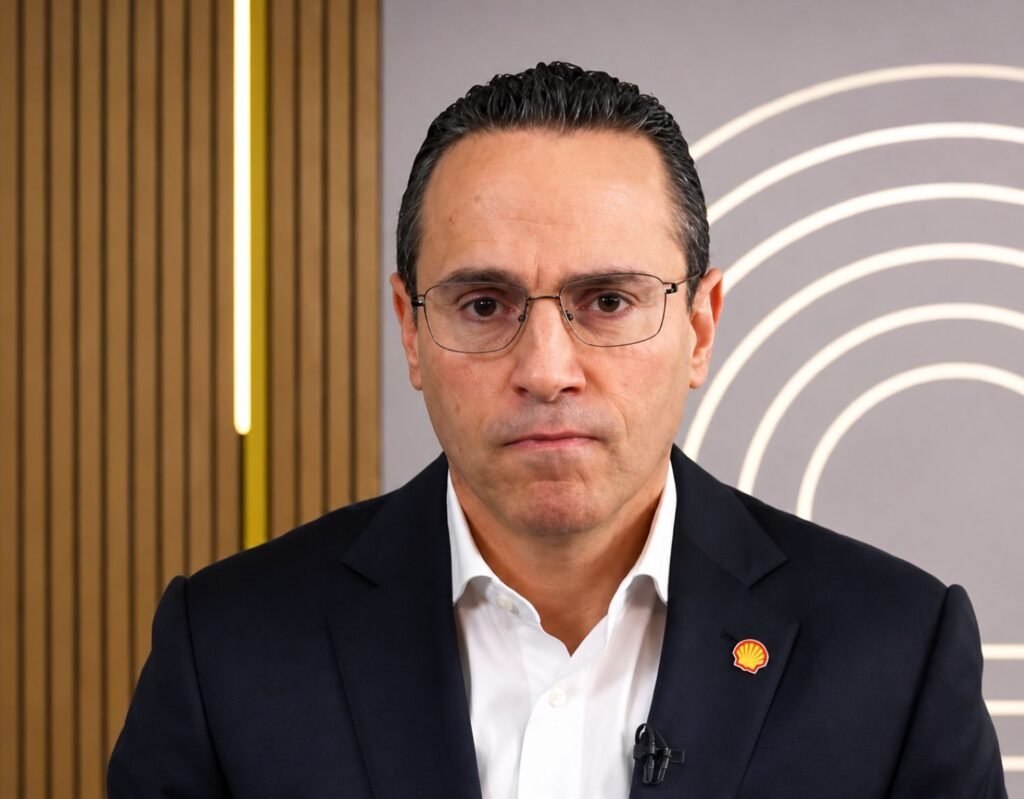
Wael Sawan conduce Shell desde el 1 de enero de 2023.
The Lebanese-Canadian executive reached the helm of the oil company after 25 years of internal career development and now oversees operations spread across four continents.
Wael Sawan has led Shell plc since January 1, 2023, when he replaced Ben van Beurden at the head of one of the world’s largest energy companies. Born in Beirut in July 1974 and raised in Dubai, he reached the position with dual Lebanese and Canadian nationality and a record of service built entirely within the company itself, which he had joined a quarter of a century earlier.
An engineer trained between Beirut, Dubai and Canada
Sawan’s education combines technical training with management. He earned a master’s degree in chemical engineering from McGill University in Canada and later interrupted his career to pursue an MBA at Harvard Business School. That dual profile — the engineer who understands production processes and the manager trained to lead large structures — shaped much of his later path within the hydrocarbon industry.
The executive is married to Nicole and has three sons, a detail that appeared consistently in the biographical profiles published when he was appointed. His personal trajectory, with roots in the Middle East and studies in North America, anticipated a professional life of global reach.
The internal rise that brought him to Shell’s leadership
Sawan joined Shell in 1997 as an engineer at Petroleum Development Oman. From there, he moved through assignments in Europe, Africa, Asia and the Americas over 25 years. He worked in deepwater operations and in the company’s businesses in Qatar, where in the mid-2000s he served as country chair and took part in the planning and early stages of the Pearl Gas-to-Liquids project.
Before taking over general leadership, he was director of the company’s upstream business. In that role, he oversaw the sale of assets in the Permian Basin in the United States and the decision to leave onshore operations in Nigeria. From November 2021, he headed the integrated gas, renewables and energy solutions division, and by then he had already been a member of the group’s executive committee for three years. When his appointment was announced, board chairman Andrew Mackenzie described him as a leader with the qualities needed to guide Shell safely and profitably through its next stage of transition and growth.
The figures Wael Sawan handles at the head of the group
The scale of the role is reflected in the numbers. For fiscal year 2023, his first full year as CEO, Sawan received total compensation of £7.9 million, about $10 million, on an annual salary of £1.4 million. Under his management, Shell directed part of its financial strategy toward share buybacks, with disbursements close to $3.5 billion per quarter and a streak of fourteen consecutive quarters with buybacks equal to or above $3 billion, with the goal of narrowing the gap with the major American energy companies.
His arrival also brought an internal reorganization. At the end of January 2023, he combined the oil, gas and LNG production divisions under a single structure headed by Zoë Yujnovich, and merged renewables operations with refining and marketing, led by Huibert Vigeveno. The reform reduced the executive committee from nine to seven members. “Fewer interfaces mean greater cooperation, discipline and speed,” Sawan said when explaining the change.
A leadership focused on key markets
Sawan’s profile is completed by his presence in the areas where Shell defines its future. In February 2026, during an investor conference, he reaffirmed the company’s interest in unconventional assets and dismissed reports about a possible exit from strategic markets. That intervention showed the role he occupies today: that of an executive who, in addition to managing the global portfolio, takes the floor to set a position before analysts when reports circulate about the company’s movements.
A little more than three years after his arrival, the engineer trained between Beirut, Dubai and Canada leads a group that continues redefining its business mix between hydrocarbons and low-emission energy. The next earnings presentation will once again test the shareholder returns strategy he defined from his first day.