Andrea Gamarnik: the biologist from Lanús who put Argentine science at the forefront of the fight against dengue
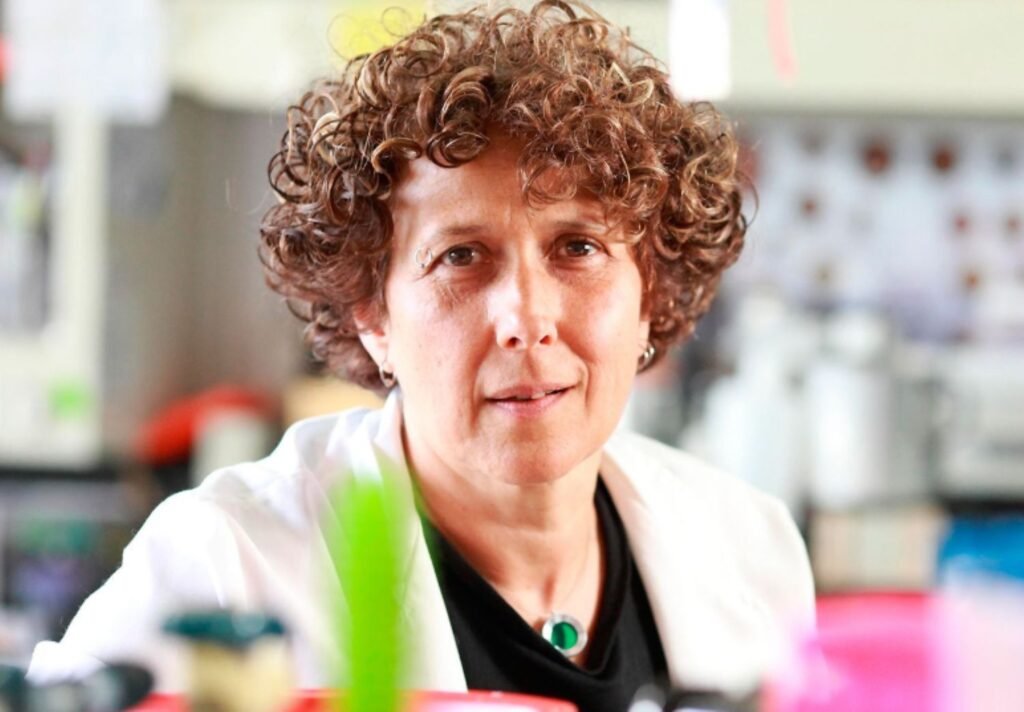
Andrea Gamarnik dirige uno de los laboratorios de virología más destacados de América Latina y desarrolló herramientas nacionales para diagnosticar COVID-19 y dengue.
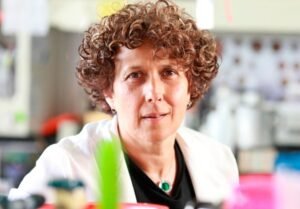
There is an image Gamarnik repeats when asked about her childhood: a microscope she received as a gift, resting on her bedside table within reach before she went to sleep. Sixty years later, the girl who examined whatever she could find nearby leads one of Latin America’s most productive virology laboratories and has contributed to what is now known about how the dengue virus replicates. Between those two moments were a scholarship from a local pharmacists’ association, nine years in California and a decision many of her colleagues did not make: to return.
From 9 de Julio Avenue in Lanús to the Faculty of Pharmacy and Biochemistry
She was born on October 5, 1964, and grew up in a house on 9 de Julio Avenue in Lanús. She attended Fray Mamerto Esquiú Primary School No. 18 and completed her secondary education at Luis Piedrabuena School. She was also the first person in her family to attend university, a fact she brings up whenever the funding of public education is discussed.
Much of her adolescence was spent at the Peretz club in Lanús, where she played table tennis and handball—competing at federation level in both—as well as football, which she describes as her true passion. She supports her hometown club.
Her choice of career was determined by a notice posted in the neighbourhood pharmacy: the Pharmacists’ Association was offering a scholarship to study Pharmacy and Biochemistry at the University of Buenos Aires. She applied, won it and, with her travel expenses and books covered, graduated as a biochemist in 1988, receiving a gold medal for the highest academic average. She completed her doctorate, also at the UBA, in 1993.
California, poliovirus and the return in 2001
In 1994, she moved to the United States to undertake postdoctoral research at the University of California, San Francisco. There she encountered a discipline she had never formally studied—virology—and remained in the field, researching the molecular mechanisms involved in poliovirus replication. Between 2000 and 2001, she worked in the biotechnology industry, developing phenotypic drug-resistance assays for HIV and hepatitis B and C.
At the end of 2001, while Argentina was experiencing its most severe crisis in recent history, a scientist repatriation programme brought her back. She joined the Leloir Institute Foundation and established the country’s first Molecular Virology Laboratory. She has directed it ever since, and more than thirty young professionals have trained at its laboratory benches. Between 2005 and 2011, she participated in the Howard Hughes Medical Institute’s International Research Scholars programme.
The dengue mechanism, explained from Buenos Aires
The work that established her as an international authority focuses on flaviviruses, the family that includes dengue, Zika and yellow fever. Her team described how the dengue virus neutralises the antiviral response of human cells in order to infect them successfully and established that this mechanism is not identical across the four circulating serotypes: DEN1, DEN2, DEN3 and DEN4.
The group also determined which changes the virus needs to make in order to move from the Aedes aegypti mosquito into human cells, a problem that extends beyond dengue because it helps explain how new pathogens emerge from animal reservoirs. Her scientific production in the field exceeds seventy-five original research papers.
Forty-five days, two national diagnostic tests
In March 2020, Gamarnik found herself facing a pandemic with limited laboratory supplies. In forty-five days, her team developed COVIDAR IgG, the first Argentine-made antibody test for SARS-CoV-2, which became essential to studies involving convalescent plasma.
Once that emergency had passed, the group returned to dengue and created the Detect-AR Dengue ELISA NS1 kit, Argentina’s first national antigen test for diagnosing the disease, capable of detecting all four serotypes. It was approved for commercialisation and export in 2024.
A display cabinet that keeps filling up
In 2009, she received the Golda Meir distinction and Argentina’s L’Oréal-UNESCO For Women in Science Award. In 2010, the Buenos Aires City Legislature declared her an Outstanding Personality in Science. The Konex Foundation awarded her a Merit Diploma in 2013 and the Platinum Konex Award in 2023, the latter in the field of Technological Development.
In 2014, she became the first Argentine woman admitted to the American Academy of Microbiology, and in 2021 she joined the American Academy of Arts and Sciences. The international L’Oréal-UNESCO award recognised her discoveries concerning mosquito-borne viruses. In December 2022, she received the National Researcher Award, the highest distinction granted by Argentina’s scientific system.
The uncomfortable issues: the glass ceiling and funding
Gamarnik uses the attention generated by her awards to highlight two issues. The first concerns CONICET’s own figures: women account for more than half of its personnel, but their representation falls to one quarter in the highest professional categories. Her own laboratory, with a high proportion of women, is the exception rather than the rule.
The second issue is funding, and her position has become part of the public debate. Since 2024, she has been one of the scientific community’s leading voices, both within Argentina and abroad, denouncing cuts to research funding under Javier Milei’s administration, including grants that had already been allocated. The Government defends those adjustments as part of its fiscal-balance programme, while the debate over how much science should be funded by the State, and through which mechanisms, remains open.
The fact that a researcher recognised by two governments of different political orientations occupies that position says something about the authority carried by her name: when she speaks, the discussion moves from the laboratory corridor into the public arena.